
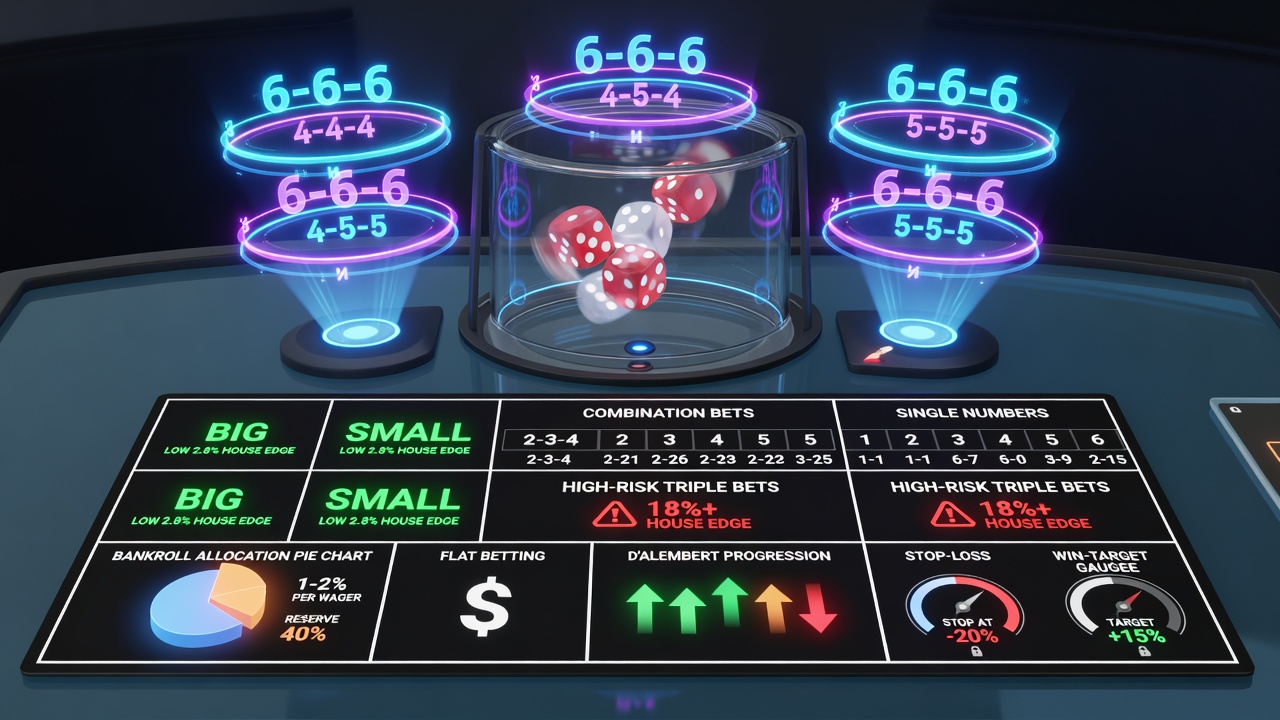
Three dice, over forty betting options, and a house edge that swings from under 3% to nearly 30% depending on where you place your chips. That single fact separates disciplined Sic Bo players from the ones who bleed their bankroll dry in twenty minutes. Super Sic Bo, the live-dealer variant that strips away the physical table and replaces it with an automated dice-shaking machine and rapid-fire rounds, has turned this ancient Chinese game into one of the fastest-paced attractions in online casinos.
Speed is exactly why a coherent super sic bo betting strategy matters more here than in almost any other table game. Rounds resolve in under a minute, which means a player without a plan can burn through a session's budget before realizing what happened. For those who want to see how the game is structured before wagering a cent, the official page offers full details on payout tables, side bets, and live gameplay mechanics. Understanding that groundwork changes how you approach every subsequent wager.
This piece breaks down the mechanics, the math, and the mindset behind a genuine sic bo winning strategy. It covers which bets carry realistic odds, which gambling systems hold up under scrutiny, and how experienced players structure their sessions to survive variance instead of getting wiped out by it.
Understanding Super Sic Bo Before You Bet
Before any strategy makes sense, the mechanics need to be clear. Super Sic Bo differs from classic Sic Bo primarily in presentation and pacing, but those differences carry real strategic weight.
How Super Sic Bo Differs From Classic Sic Bo
Classic Sic Bo relies on a human dealer shaking a caged basket by hand. Super Sic Bo replaces that with an automated randomizer, often paired with multiplier features that boost payouts on specific triple or combination outcomes. The randomizer speeds up rounds considerably, sometimes doubling the number of hands dealt per hour compared to a traditional table. That pace changes bankroll math: more decisions per hour means variance compounds faster, for better or worse.
Payout Structure and House Edge by Bet Type
Not all bets are created equal. A Small or Big bet, which wins if the total falls within a defined range excluding triples, carries a house edge close to 2.8%, among the lowest on the table. Specific triple bets, by contrast, can carry a house edge above 18%, because the payout multiplier rarely compensates for how rare that outcome is. Any single-number bet sits in the middle, while combination bets on two specific numbers land somewhere between the two extremes.
Reading the Table Layout Correctly
The betting grid can look intimidating at first glance, with dozens of numbered boxes surrounding the dice display. New players often misplace chips simply because they misread which box corresponds to which combination. Spending five minutes studying the layout before wagering real money prevents costly misclicks during fast-paced rounds.
Core Principles of a Super Sic Bo Betting Strategy
Every effective approach to this game rests on a handful of principles that rarely change regardless of session length or bankroll size.
Bankroll Allocation Before the First Roll
Decide on a fixed session bankroll and split it into units before placing a single bet. A common approach allocates 1-2% of total bankroll per wager, which allows for extended play even through a rough streak. This discipline matters more in Super Sic Bo than in slower games, since rapid rounds can drain an undisciplined bankroll within minutes.
Choosing Bets Based on Probability, Not Payout Size
High payouts attract attention, but attractive numbers on the paytable often mask terrible odds. A triple-six bet might pay 150 to 1, yet the actual probability of that specific outcome is roughly 1 in 216. Comparing payout against real probability, rather than chasing the biggest number on the board, is the foundation of any serious sic bo winning strategy.
Combining Bets for Balanced Risk
Some players split their unit between a low-risk Big/Small bet and a smaller wager on a specific total, balancing steady, modest returns against occasional larger wins. This hybrid approach smooths out volatility without eliminating upside entirely.
- Fixed unit size per bet, adjusted only after a set number of rounds
- Priority given to bets with house edge under 5%
- A hard stop-loss and a hard win target defined before play begins
Proven Sic Bo Gambling Systems Explained
Betting systems don't change the underlying math of the game, but they do shape how a bankroll behaves over time. Knowing their mechanics prevents both overconfidence and unnecessary panic.
The Martingale Approach in Sic Bo
Martingale doubles the wager after every loss, aiming to recover previous losses with a single win. In a game with fast rounds like Super Sic Bo, this system can escalate bet sizes dangerously quickly. A five-loss streak, which isn't rare given the game's volatility on certain bets, can multiply an initial unit by thirty-two times within minutes.
The D'Alembert Method for Steadier Sessions
D'Alembert increases the bet by one unit after a loss and decreases it by one unit after a win, producing a gentler progression than Martingale. It suits players who prioritize longer sessions over dramatic recoveries, and it pairs naturally with low-edge bets like Big or Small.
Flat Betting as a Risk-Control Baseline
Flat betting keeps wager size identical regardless of outcome. It won't accelerate winnings, but it protects against the ruinous escalation that progressive systems can trigger during a losing streak. Many experienced players treat flat betting as the default and only deviate from it with strict limits in place.
Why No System Beats the House Edge
Every gambling system reallocates risk across a session; none of them alter the probability of any given dice outcome. The house edge remains fixed regardless of bet sizing pattern, which means the primary value of any sic bo gambling system lies in bankroll survival, not in tilting the underlying math.
Super Sic Bo Tips for Consistent Play
Strategy on paper only matters if it translates into consistent decisions at the table. These tips focus on execution.
Setting Session Limits Before You Start
Decide on a loss limit and a win target before the first bet, then honor both without exception. Because rounds move quickly, it's easy to lose track of cumulative losses until the session has already gone sideways.
Avoiding Triple and Specific Number Traps
The most tempting bets on the layout, triples and single specific numbers, also carry the worst odds. Occasional wagers on these for entertainment value are fine, but building a strategy around them guarantees long-term losses.
Using Multiplier Rounds Wisely
Many Super Sic Bo variants include random multiplier boosts on certain numbers before a round begins. These multipliers can make an otherwise weak bet temporarily attractive, but only if the boosted payout meaningfully outweighs the bet's inherent low probability. Evaluate the math each time rather than betting on instinct.
Tracking Results Without Chasing Patterns
Dice have no memory. Tracking previous rounds can help with bankroll discipline, but treating streaks of small or big totals as predictive signals is a common and costly mistake.
Building the Best Sic Bo Strategy for Your Play Style
There's no single universal answer, because risk tolerance and session goals vary from player to player. The best sic bo strategy is the one that matches your actual behavior under pressure, not an idealized version of it.
Conservative Strategy for Long Sessions
Players who value session length over big wins should lean almost entirely on Big and Small bets, using flat betting and strict stop-losses. This approach accepts modest returns in exchange for stretching the bankroll across far more rounds.
Balanced Strategy for Moderate Risk Tolerance
A balanced player splits wagers between low-edge bets and occasional combination bets, using a mild progression system like D'Alembert. This keeps sessions engaging without exposing the bankroll to Martingale-style spikes.
Aggressive Strategy for Short, High-Variance Sessions
Players comfortable with higher volatility might allocate a larger portion of their unit to specific numbers or triples during multiplier rounds, accepting that most sessions will end in a loss in exchange for occasional large payouts. This approach demands a strict bankroll cap, since the downside can escalate fast.
Common Mistakes That Undermine a Super Sic Bo Betting Strategy
Even players with a sound strategic framework often sabotage themselves through a handful of predictable errors.
Ignoring the House Edge Differences Between Bets
Treating all bets as roughly equivalent in risk is the single most damaging mistake a new player can make. A quick review of the paytable's implied house edge for each bet type takes less time than a single round and pays dividends over an entire session.
Escalating Bets Emotionally After a Loss
Increasing wager size out of frustration, rather than as part of a predefined system, is how bankrolls disappear fastest. This behavior mimics Martingale without its structure, which removes any protective logic the system might otherwise provide.
Playing Without a Predefined Exit Point
Open-ended sessions, where a player keeps going "just a little longer," consistently end worse than sessions bound by a clear win target or loss limit set in advance.
Frequently Asked Questions
Is there a betting system that guarantees profit in Super Sic Bo?
No. Every gambling system, including Martingale and D'Alembert, manages how a bankroll fluctuates but cannot change the fixed house edge on any given bet. Long-term expected value remains negative regardless of bet sizing pattern.
Which single bet offers the best odds in Super Sic Bo?
Big and Small bets typically carry the lowest house edge, often close to 2.8%, making them the most mathematically sound choice for players prioritizing longevity over big payouts.
How much bankroll should I bring to a Super Sic Bo session?
A practical approach is to bring enough to cover at least 50 to 100 betting units at your chosen wager size, which allows enough rounds to absorb normal variance without exhausting funds prematurely.
Do multiplier features change the underlying strategy?
They can temporarily improve the payout-to-probability ratio on specific bets, but only during active multiplier rounds. Outside those rounds, the standard probability and house edge calculations still apply.
Is Super Sic Bo more volatile than classic Sic Bo?
The underlying probabilities are identical, but the faster round pace in Super Sic Bo means variance accumulates more quickly per hour of play, which makes bankroll discipline even more critical.
Should beginners avoid triple bets entirely?
Not entirely, but beginners should understand that triple bets carry some of the highest house edges on the table. Occasional small wagers for entertainment are reasonable; building a core strategy around them is not.