
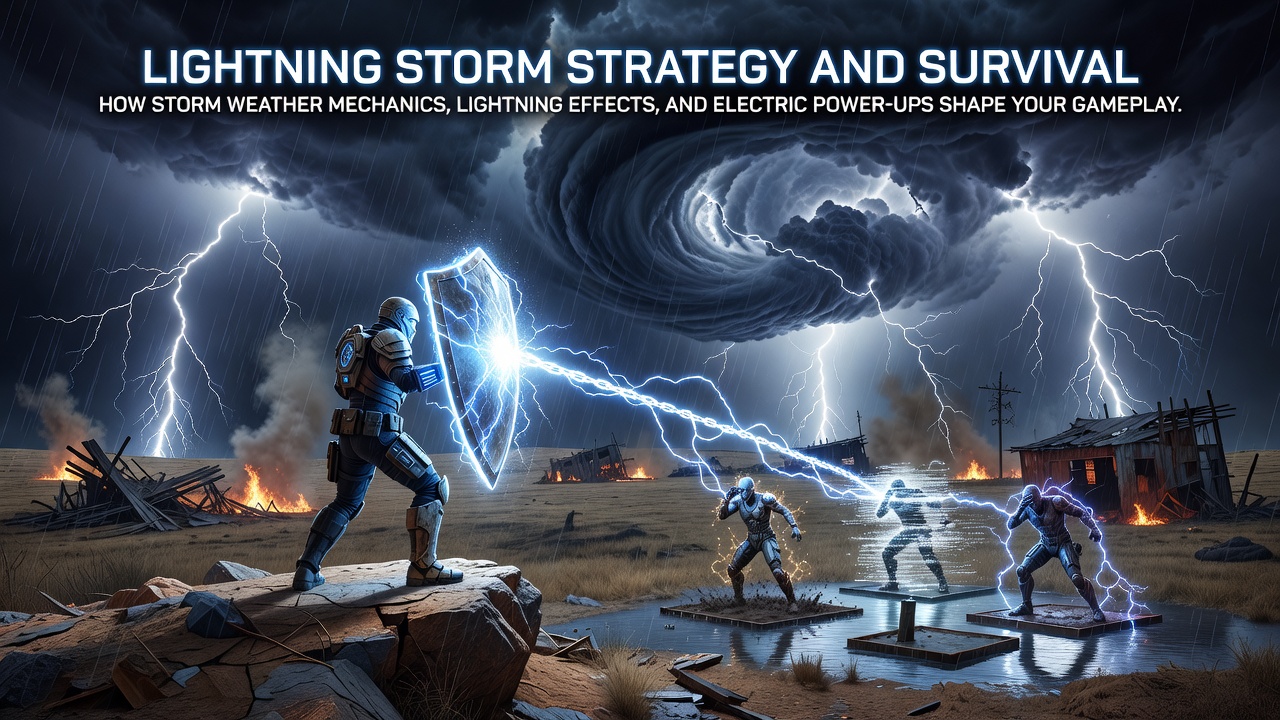
A single lightning bolt carries enough energy to fry unshielded circuitry, blind a player's screen for half a second, or chain across three enemies standing too close together. That single detail - the chain reaction - is why storm-based mechanics have become one of the most reliable ways to turn a static battlefield into something unpredictable and alive. Developers who build around weather don't just add rain particles for atmosphere. They build systems where the sky itself becomes an opponent, a resource, and occasionally a savior.
This is the terrain where a lightning storm strategy game earns its name. The storm isn't decoration; it's a variable that forces decisions every few seconds. Should you stay in the open to bait a strike toward an enemy, or retreat to cover and lose tactical position? For players who want to see how far this design philosophy can go in a polished, focused format, the lightning storm game built around exactly this tension offers a compact demonstration of how far weather-driven risk can be pushed. It rewards patience as much as aggression.
What follows is a breakdown of how these systems actually work under the hood - the mechanics, the risks, the power-ups, and the survival instincts that separate players who thrive in a storm from those who get struck down by their own carelessness.
Understanding Storm Weather Mechanics
Storm systems in games are rarely random for the sake of randomness. Underneath the visual chaos sits a set of rules governing when lightning strikes, where it lands, and how the environment reacts. Understanding these rules is the first step toward treating the storm as a tool rather than a threat.
How Storms Are Triggered and Escalate
Most storm weather mechanics follow a build-up pattern: ambient wind and darkening skies signal an approaching front, followed by scattered strikes that intensify in frequency and radius. This escalation curve exists so players can read the environment and adjust before the danger peaks. In a thunderstorm survival game, that early warning window is often the only advantage a player gets - miss it, and you're improvising in the middle of a full-intensity storm with no time to reposition.
Terrain Interaction and Conductivity
Not all ground is equal once the sky opens up. Metal structures, water pools, and elevated terrain typically attract strikes more aggressively than dry, low-lying cover. Games that model this well turn the map into a living hazard chart - a player who understands which surfaces conduct danger can herd enemies toward exposed ground while keeping to safer paths themselves.
Visibility and Sound as Tactical Signals
Thunder delay, screen flicker, and static audio distortion aren't just flavor. They're diegetic warnings baked into storm weather mechanics, giving attentive players a fraction of a second to react before a strike lands. Ignoring ambient audio cues is one of the most common reasons new players get caught off guard.
- Rising wind speed usually precedes the first strike by several seconds
- Metallic or elevated terrain increases local strike probability
- Audio cues like distant thunder rumble often telegraph incoming intensity spikes
Lightning Effects Gameplay: What Actually Happens When You Get Struck
The moment lightning connects is where design intent becomes most visible. A strike that simply deals damage is a blunt instrument; a strike that alters movement, vision, or control creates lasting tension even after the immediate danger passes.
Direct Damage Versus Status Effects
Many titles split lightning effects gameplay into two categories: burst damage on contact, and lingering status conditions like slowed movement, disrupted aiming, or temporary blindness. The lingering effects tend to matter more strategically, since they extend vulnerability well beyond the initial hit.
Chain Lightning and Area Denial
Chain lightning - where a strike jumps between nearby targets - punishes clustering. This single mechanic quietly reshapes positioning across an entire match, discouraging players from grouping up even when grouping would otherwise be tactically sound. It's a subtle way of forcing spatial discipline without an explicit rule against it.
Environmental Destruction from Strikes
Some systems let lightning reshape the map itself: igniting flammable terrain, collapsing weakened structures, or short-circuiting powered defenses. This turns the storm into an indirect weapon - smart players wait for a strike to soften an obstacle rather than spending resources to clear it themselves.
Electric Power-Ups in Game Design
If storms are the threat, power-ups are the counterweight. Electric power-ups in game systems typically convert the very hazard threatening the player into a temporary advantage, and how that conversion is balanced determines whether the storm feels fair or punishing.
Absorption and Redirection Abilities
Absorption mechanics let a player soak up a nearby strike and store its energy for later use - a shield charge, a burst attack, or a movement boost. Redirection abilities go further, letting players aim a strike toward a chosen target instead of taking the hit passively. Both approaches reward timing over raw stat advantage.
Temporary Immunity and Shielding
Short-duration immunity windows are common in higher-difficulty modes, giving players a brief opportunity to cross exposed terrain or push an aggressive play without fear of being struck. These windows are usually short by design, since permanent immunity would remove the storm's core tension entirely.
Offensive Electric Boosts
Beyond defense, many electric power-ups in game economies double as weapons - charged melee strikes, area-of-effect bursts, or weapon overcharges that deal bonus damage for a limited time. These offensive variants usually carry a cooldown or resource cost, keeping their use deliberate rather than constant.
- Absorption converts incoming strikes into stored energy or resources
- Redirection lets players weaponize a strike against opponents
- Immunity windows are typically brief to preserve overall risk
Core Strategy for a Lightning Storm Strategy Game
Mechanics only matter if players can translate them into repeatable decision-making. This is where raw knowledge of the systems turns into an actual playstyle.
Reading the Storm's Rhythm
Every storm cycle has a rhythm - buildup, peak intensity, and a brief lull before the next escalation. Players who track this rhythm can time aggressive pushes for the lull and retreat to cover before the next peak. Ignoring the rhythm and playing reactively almost always costs more resources than playing proactively.
Positioning as Risk Management
Good positioning in a lightning storm strategy game isn't just about cover from enemy fire - it's about minimizing exposure to conductive terrain while still maintaining sightlines. This dual consideration is what separates competent players from those who treat the storm as background noise.
Resource Timing Around Power-Up Windows
Since electric power-ups in game systems often have limited charge windows tied to storm intensity, timing their use around peak strike frequency yields far more value than using them defensively at random moments. Saving an absorption ability for the storm's most intense phase, for example, usually pays off more than using it early out of caution.
Survival Tactics in a Thunderstorm Survival Game
Strategy games reward optimization; survival games reward adaptability. When the genre leans into pure survival, the priorities shift from maximizing damage output to simply outlasting the storm.
Shelter Selection and Prioritization
Not every shelter is created equal. Structures with grounding elements or non-conductive materials offer better protection than open lean-tos or metal-framed cover. Prioritizing shelter quality over proximity is often the difference between a clean survival run and a mid-storm restart.
Managing Panic Mechanics and Player Stress
Some thunderstorm survival game designs introduce stress or panic meters that degrade a character's accuracy or movement under prolonged storm exposure. Managing these meters requires deliberate pacing - resting in safe pockets rather than pushing continuously through danger.
Long-Term Survival Resource Planning
Extended survival runs demand planning beyond the current storm cycle. Stockpiling insulated materials, healing items, or backup power-ups before a storm intensifies is almost always more effective than scrambling for resources once the danger has already peaked.
Balancing Risk and Reward Across Storm-Based Games
The best storm systems succeed because they make risk feel meaningful rather than arbitrary. A strike that always kills instantly removes strategy; a strike that never threatens removes tension. The sweet spot lives in between.
Difficulty Scaling Tied to Storm Intensity
Many games scale enemy difficulty or resource scarcity directly with storm intensity, meaning the most dangerous weather phases also offer the highest potential reward. This pairing keeps players engaged with the storm rather than simply avoiding it.
Player Agency Versus Environmental Chaos
Good design preserves a sense of control even amid chaos. Warning cues, predictable escalation patterns, and counterplay tools like electric power-ups in game systems all exist to make sure the storm feels challenging rather than arbitrary - a distinction that keeps players coming back rather than walking away frustrated.
Why These Systems Keep Players Engaged
Storm-based tension works because it introduces a threat no player can fully control, only manage. That unpredictability, paired with tools sharp players can master, is exactly why lightning effects gameplay continues to appear across strategy, survival, and hybrid genres alike.
Frequently Asked Questions
Is lightning always random in these games, or can players predict strikes?
Strikes are rarely pure randomness. Most systems weight probability based on terrain conductivity, elevation, and storm intensity, meaning attentive players can predict likely strike zones even without exact certainty.
What's the fastest way to lose progress in a thunderstorm survival game?
Ignoring shelter quality in favor of speed is the most common mistake. Ducking into the nearest structure without checking its material often leads to avoidable strikes during peak storm phases.
Do electric power-ups work the same way in every game?
No. Some titles favor absorption and redirection mechanics that reward timing, while others lean toward straightforward offensive boosts. The underlying philosophy - turning hazard into opportunity - stays consistent even when the implementation differs.
Why do some strikes deal more damage than others in the same storm?
Damage scaling usually ties to storm intensity phases and terrain conductivity at the strike location. A hit during peak intensity on exposed metal terrain will almost always outdamage a strike during a calmer lull on neutral ground.
Can positioning alone prevent all lightning damage?
Not entirely, but strong positioning drastically reduces exposure. Combining smart terrain choices with timed power-up use covers the gap that positioning alone can't close.
Why do storms feel harder in later game stages?
Escalating difficulty is intentional. Storm frequency and strike radius typically scale with progression, forcing players to adapt their strategy and power-up timing rather than relying on early-game habits.